How Long to Steep Tea: Times by Type
- Start with the tea, not one universal timer
- A practical tea steeping time chart
- Keep ratio, temperature, and time together
- Use one repeatable first cup
- Why named teas beat colour categories
- Tea bags can finish sooner than loose leaf
- Gongfu time is a different system
- Herbal and fruit infusions need their label
- Fix a bitter or astringent cup
- Fix a weak, flat, or hollow cup
- Use the timer until you have a method
- Handle hot water without improvising
- Steep time is not a caffeine-control tool
- The shortest useful answer
Start with the tea, not one universal timer
For one Western-style infusion, start green or delicate white tea at 1–3 minutes, oolong at 2–5, black tea at 3–5, and many herbal or fruit infusions at about 5 minutes. The packet outranks this chart. Leaf size, processing, leaf-to-water ratio, water temperature, and the result you want can move the useful time in either direction.
Start the timer when water meets leaf. Stop extraction by removing the bag or infuser, or by pouring the pot out completely. Then taste. If the cup is harsh, shorten the next steep; if it is thin but otherwise pleasant, extend it in a small measured step.
A practical tea steeping time chart
Use these as first-test settings when the producer gives no method. They assume roughly 2.5–3 grams of loose tea per 250 millilitres of water in a mug or pot, not a leaf-heavy gongfu session.
| Tea | First Western-style steep | Useful first adjustment |
|---|---|---|
| Japanese sencha and other delicate green tea | 1–2 minutes | Change by 15–30 seconds |
| Other green tea | 2–3 minutes | Change by 15–30 seconds |
| Young, delicate white tea | 1–3 minutes | Extend toward 4–5 minutes if still thin |
| Large-leaf, aged, or compressed white tea | 3–5 minutes | Follow the producer; leaf style matters |
| Oolong | 2–5 minutes | Start near 3 minutes for one larger infusion |
| Black tea | 3–5 minutes | Small broken leaf may finish sooner than large leaf |
| Fermented dark tea | 2–4 minutes | Follow any rinse and repeat-infusion directions |
| Herbal or fruit infusion | Start at 5 minutes | Follow the product label; ingredients vary widely |
This is deliberately a range, not a claim that every tea in a colour category behaves alike. The UK Tea & Infusions Association's named-tea table gives 2–2.5 minutes for sencha, 2–3 for jasmine green tea, 3–4 for gunpowder and several black teas, 3–5 for oolong, and 4–5 for Lapsang Souchong. Those differences are useful evidence against a single “green tea time” or “black tea time.”
Keep ratio, temperature, and time together
Steep time is one of three linked controls:
- Leaf-to-water ratio decides how much material is available for extraction.
- Water temperature changes how quickly and in what balance compounds move into the water.
- Time determines how long that extraction continues.
The chart's 2.5–3 grams per 250 millilitres is a repeatable house setting, not a law. If your packet gives a different ratio, use it. Large white-tea leaves can make spoon measures particularly unreliable, while a compact tea bag can contain much smaller particles. Weighing the leaf keeps one variable still.
Use the producer's temperature or the tea brewing temperature guide. Do not compensate for water that is far too cool by leaving the leaves in indefinitely. That changes time as a second variable and makes the result hard to diagnose.
The UK Tea Academy's brewing guidance uses 2.5–3 grams per 200 millilitres for its own service standard and separates black-tea times by particle size: 1.5–2 minutes for small particles, 2–3 for medium leaf, and 3–5 for large leaf. That is not the ratio used in this chart. It demonstrates the important point that a short time with fine leaf can extract more than a longer time with large intact leaf.
Use one repeatable first cup
For a new loose-leaf tea, make one documented cup:
- Weigh 2.5–3 grams of leaf for 250 millilitres of water, unless the packet says otherwise.
- Heat water to the packet's temperature or a sensible family starting range.
- Start the timer as soon as the water contacts all the leaf.
- Keep the vessel covered if the product directs it and the lid is safe to handle.
- When time ends, remove the bag or basket, or decant the pot completely.
- Let the cup cool to a safe drinking temperature, then note aroma, body, sweetness, bitterness, astringency, and finish.
Write down the leaf weight, water volume, temperature, and time. “Three minutes at 85°C” can be repeated. “About that long with fairly hot water” cannot.
Separate the leaves from the liquor cleanly. The UK Tea Academy notes that leaving them together continues extraction. A small puddle left in a gongfu vessel does the same thing on a concentrated scale. An infuser basket should be roomy enough for the leaf to wet and open, and easy to remove without handling hot metal.
Why named teas beat colour categories
The official Japan Tea Central Public Interest Incorporated Association preparation guide uses about 3 grams of sencha and 120 millilitres of water per person at 70–80°C/158–176°F, steeped for 1–2 minutes. Its second infusion is only 30 seconds because the leaves are already wet and open.
The same guide gives gyokuro a 2-minute steep with 3 grams leaf and only 20 millilitres water per person at 50–60°C/122–140°F. Bancha and hojicha receive boiling water and 30 seconds. All are Japanese teas; their methods are plainly not interchangeable.
Use those figures for those named methods, not as a licence to force every sencha, gyokuro, bancha, or hojicha into one setting. Producer instructions may account for the actual cultivar, leaf grade, processing, and intended result.
Tea bags can finish sooner than loose leaf
A tea bag is not automatically weak, and loose leaf is not automatically slow. Particle size matters. Smaller pieces expose more surface to water and can produce a strong, drying cup quickly; large intact leaves may need more time or more room.
For an ordinary black tea bag with no useful packet direction, taste at 3 minutes and remove it by 5 minutes unless you specifically prefer a stronger result. Do not squeeze a hot bag with bare fingers. Squeezing also changes the comparison, because the next cup was not merely steeped for a different time.
With loose leaf, use a basket or pot that allows full wetting. A cramped ball may give uneven results: the outer leaves wet first while the centre opens later. More minutes are not a reliable substitute for enough brewing space.
Gongfu time is a different system
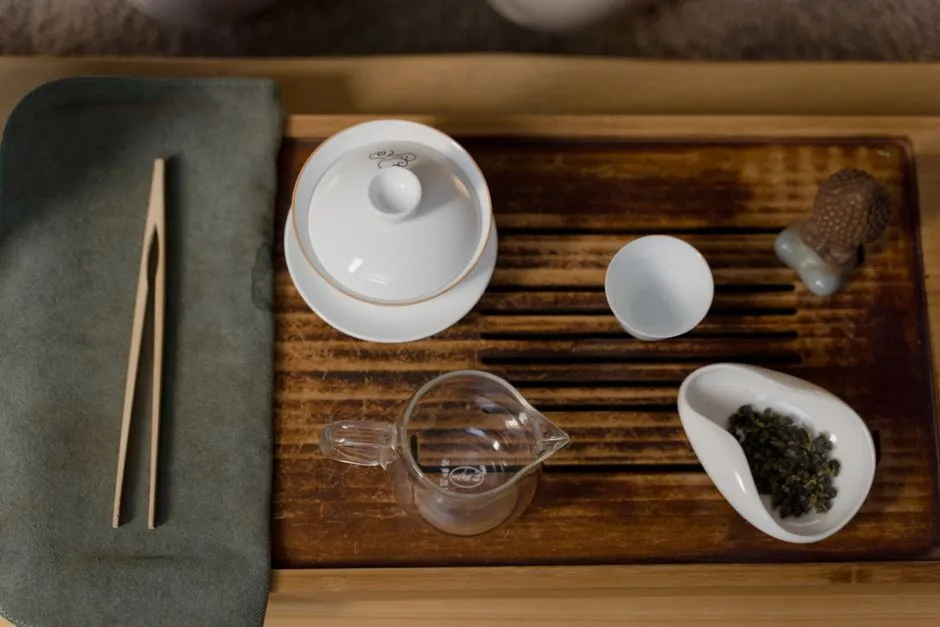
Gongfu-style brewing uses far more leaf per millilitre and repeated short infusions. A Western range of 2–5 minutes does not transfer to a gaiwan holding 5–8 grams per 100 millilitres. Initial gongfu infusions may last only seconds.
Use the gongfu versus Western brewing guide for the full ratio comparison. Its broad starting settings are 2.5–3 grams per 250 millilitres for Western brewing and 5–8 grams per 100 millilitres for gongfu-style brewing. At 3 grams per 250 millilitres, the Western concentration is 1.2 grams per 100 millilitres; 6 grams in a 100-millilitre gaiwan is five times that leaf concentration.
Short times only work if the pour is complete. Start timing when water reaches the leaf, then decant all the liquor when the interval ends. Lengthen later rounds when flavour fades, but let the leaf tell you; the sencha example above shows that a second infusion can instead be shorter.
Herbal and fruit infusions need their label
Herbal and fruit infusions are not one plant family. Peppermint leaves, chamomile flowers, hibiscus, fruit pieces, rooibos, roots, spices, and blends can require different handling. They can also carry ingredient-specific directions.
The UK Tea & Infusions Association's infusion guidance says products not explicitly labelled for cold brewing should be prepared first with freshly boiled water, even when the finished drink will be cooled and served over ice. Follow the package time and water instruction rather than applying a green-tea rule to a root-and-spice blend.
Products marketed for medicinal use, or ingredients relevant to allergies, pregnancy, medicines, or a health condition, are outside a casual flavour chart. Follow the label and seek individual advice from an appropriate health professional.
Fix a bitter or astringent cup
Bitterness is a taste. Astringency is the drying, puckering sensation that can accompany it. If either is excessive:
- Shorten the next steep by 20–30 seconds while keeping ratio and temperature fixed.
- If it remains harsh, lower the water temperature by 5°C/9°F for the next test.
- If short and cooler still tastes crowded, reduce leaf by 0.5 gram per 250 millilitres.
Change one setting per cup. The UK Tea Academy explains its recommendation in extraction terms: longer steeping releases more bitter components, and leaving leaf in the liquor continues that process. That does not mean a long steep is always bad. A large-leaf black tea or white tea may need it; the point is to match time to the leaf and ratio.
If the current cup is merely too strong, remove the leaf and add a little hot water. Do not try to reverse extraction by returning liquor to the kettle or adding an unmeasured household chemical.
Fix a weak, flat, or hollow cup
If the cup is pleasantly flavoured but too light, extend the next steep by 15–30 seconds. If it remains thin, return to the original time and add 0.5 gram leaf per 250 millilitres. That tells you whether time or ratio was missing.
If the cup is flat rather than simply light, verify fresh water, correct temperature, dry aromatic leaf, and enough room in the infuser. Very stale tea does not regain lost aroma through a heroic ten-minute steep. Check the leaf against the loose-leaf storage guide before blaming the timer.
A tea that becomes rough before it becomes full may want more leaf and less time, not more of both. This is especially useful with broken black tea and some aromatic green teas.
Use the timer until you have a method
A timer helps while you are comparing cups, working at a desk, or learning a tea whose first and fifth minutes taste very different. Use it to create evidence, not to overrule taste.
Once a method is stable, visual and sensory cues can help: leaves open, aroma changes, colour develops, and the finish becomes more or less drying. Those cues are specific to the tea and vessel. They become useful only after you connect them to measured cups.
If you lose track, remove the leaf and taste after the cup cools enough. Record “time unknown” rather than inventing precision. The next controlled brew will teach more than trying to reconstruct a distracted afternoon.
Handle hot water without improvising
Use a stable, heat-safe vessel on a clear surface. Keep the kettle cord, hot cup, and removed infuser away from edges and children. The Public Health Agency of Canada specifically advises keeping hot tea out of children's reach and putting a hot drink down before picking up a child.
Keep hands clear of steam. Use the vessel handle or an appropriate cloth, and do not overfill a pot or gaiwan. Let tea cool before tasting. If a lid, basket, or pot is too hot to control securely, set it down and use equipment designed for safe handling.
Steep time is not a caffeine-control tool
Changing steep time changes extraction, but it does not turn a caffeinated tea into a reliably low-caffeine drink. Leaf material, ratio, temperature, time, repeat infusions, serving volume, and the specific product all affect the cup.
The US Food and Drug Administration advises considering caffeine from all sources and notes that sensitivity varies with factors including medicines and health conditions. Its current caffeine guidance routes people who are pregnant, trying to become pregnant, breastfeeding, or concerned about a condition or medicine to their health professional about individual limits. A labelled decaffeinated or caffeine-free product is more dependable than guessing from steep time.
The shortest useful answer
Start with the packet. If it gives no time, use the chart, measure the ratio and temperature, and remove the leaf completely when the timer ends. Taste after the cup is safe to drink. For the next brew, change time in a small step before changing anything else.
The timer is not the judge. It is the notebook entry that lets your tongue make a fair comparison.