Five-Minute Tea Mindfulness: A Plain Practice
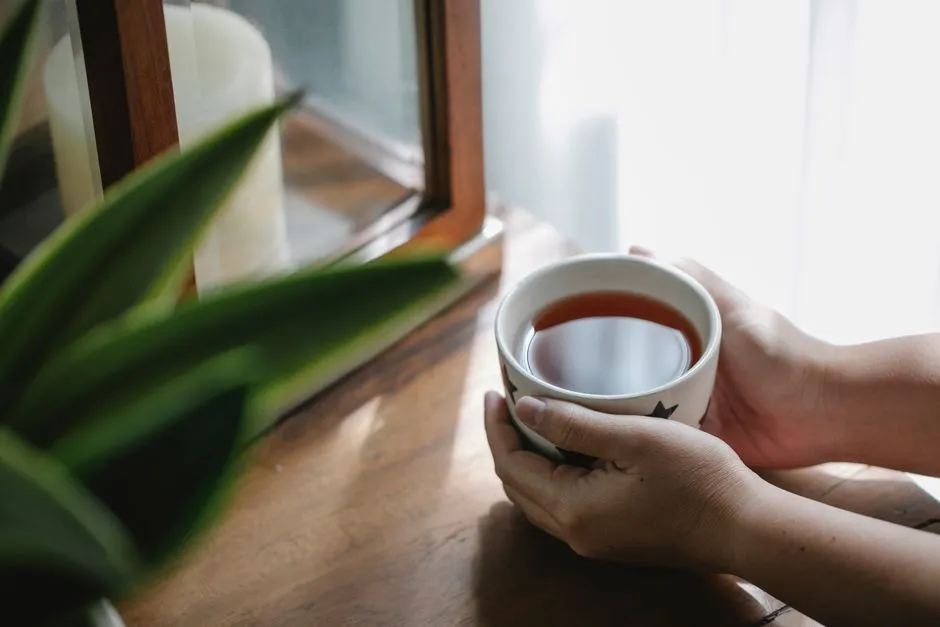
- Five minutes of noticing, not fixing
- Prepare the cup safely
- Choose an exit before starting
- Minute 0–1: contact and location
- Minute 1–2: look and smell
- Minute 2–3: first sip
- Minute 3–4: preference and reaction
- Minute 4–5: choose what follows
- When the mind wanders
- Eyes open is fully mindful
- Tea choice changes the experience
- A one-minute version
- Practising without tea
- Keep claims smaller than the cup
Five minutes of noticing, not fixing
This practice uses an ordinary cup of tea as an attention anchor. For five minutes, you notice contact, sight, smell, temperature, taste, thoughts, and choice. You are not required to empty the mind, become calm, improve productivity, or discover that steam contains strategic guidance.
Mindfulness is often defined as present-moment awareness with less automatic judgment. That simple phrase covers many traditions and modern programs. This exercise is a small secular attention practice, not a complete meditation tradition or treatment.
NCCIH's mindfulness overview notes that research varies and is sometimes interpreted too optimistically. Practices can also bring uncomfortable effects for some people. Do not use this page to replace or delay mental-health or medical care.
Prepare the cup safely
Brew a familiar tea, decaffeinated tea, or caffeine-free food-grade infusion that suits you. Follow its label and our tea temperature guide. Let it cool to a comfortable drinking temperature.
Place the cup on a stable table. Sit or stand where hot liquid cannot be knocked into your lap. Keep eyes open if you prefer. Silence the timer alarm volume before it concludes the practice with a small emergency.
If caffeine worsens anxiety, sleep, palpitations, reflux, or another concern, choose a suitable alternative and discuss individual limits with a health professional. Tea is the anchor, not the active ingredient in mindfulness.
Choose an exit before starting
You may stop at any time. If focusing inward feels agitating, disorienting, emotionally overwhelming, or physically uncomfortable:
- put the cup down;
- open or lift the eyes;
- look around and name five visible objects;
- feel both feet or another stable contact;
- return to ordinary activity; and
- seek appropriate support if distress continues.
People with trauma histories, panic, dissociation, or other mental-health concerns may prefer externally focused practices or qualified guidance. No benefit requires enduring distress.
Minute 0–1: contact and location
Start a quiet five-minute timer. Do not pick up the cup yet.
Notice where the body meets chair, floor, or counter. Feel pressure rather than trying to relax it. Name the location and time silently: “I am in the kitchen on Tuesday morning,” or whatever is true.
Notice three sounds. They need not be peaceful. A refrigerator hum and somebody reversing a truck are both fully certified present-moment phenomena.
Let breathing happen without changing it. If attention moves to a thought, say “thinking” silently and return to contact.
Minute 1–2: look and smell
Look at the cup, liquor, and any steam. Notice colour where light passes through, the line at the surface, bubbles, leaf particles, and the cup's shape.
Avoid immediately naming the tea “good” or “bad.” First collect details: amber, pale, cloudy, bright, still, moving.
Bring the cup toward you with both hands if safe. Notice its weight and surface temperature. Smell once at a natural distance, then again closer if comfortable.
Can you identify roast, grass, flowers, fruit, wood, malt, spice, sea air, paper, or simply “warm tea”? Aroma vocabulary is optional. The nose will not be graded by a tiny sommelier behind the timer.
Minute 2–3: first sip
Check temperature with a cautious small sip. If too hot, put the cup down and keep observing. Mindfulness does not make mouth tissue heatproof.
If comfortable, take one small sip. Notice where flavour appears first and how it changes. Attend to temperature, texture, sweetness, bitterness, acidity, savoury character, aroma moving behind the nose, and the finish after swallowing.
Do not force a slow-motion performance. One ordinary deliberate sip is enough. Notice any impulse to reach immediately for the next.
Minute 3–4: preference and reaction
Take another sip if wanted. This time notice preference. Do you like it? Is the dislike broad or specific? Perhaps the tea is thin, drying, too cool, smoky, or exactly right.
Notice thoughts: “I used too much leaf,” “I should answer that message,” “This is silly,” or “I want a biscuit.” Thoughts are not failures. They are events you noticed.
If a judgment is useful, keep it. A mindful cup can still be badly brewed. The practice is not a loyalty oath to hot leaf water.
For the next session, adjust one variable using gongfu versus Western brewing or the temperature guide. Attention can produce practical notes without becoming self-optimization homework.
Minute 4–5: choose what follows
Set the cup down. Notice contact with the table, then the body's contact again. Look around the room.
Ask one plain question: “What is the next appropriate action?” The answer may be finish the cup, drink water, eat breakfast, return to work, wash the pot, call someone, or stop drinking a tea you dislike.
When the timer ends, take one ordinary breath and continue. There is no need to preserve a special state. If nothing changed, that is a valid observation.
When the mind wanders
Wandering is part of the exercise. Each time you notice it, return to one sensory anchor:
- the cup's weight;
- feet on the floor;
- a sound;
- colour;
- aroma; or
- the taste remaining after a sip.
Do not count returns as mistakes. Returning is the repetition. A five-minute practice with twenty returns contains twenty moments of noticing.
If the same worry keeps appearing, you do not have to solve it during the timer. Write it down afterward if it needs action. If it signals danger or urgent care, end the practice and respond.
Eyes open is fully mindful
Closing the eyes can intensify internal sensations or reduce safety around hot liquid. Keep them open. Rest the gaze on the cup or a neutral object.
In public, widen attention to the room, exits, other people, and your belongings. Do not withdraw so deeply that somebody clears the cup, chair, and perhaps you.
Walking, driving, cooking, supervising a child, or operating equipment are not times for this inwardly focused tea exercise. Attend to the safety-critical task.
Tea choice changes the experience
A strong black tea creates different sensations from a delicate green or caffeine-free peppermint infusion. Temperature, caffeine, aroma, and expectation all enter the practice.
Use the same tea for several sessions if you want to notice brewing changes. Store it correctly with the loose-leaf tea storage guide so oxidation and cupboard odour do not become accidental variables.
Do not interpret every sensation as a health effect. Warmth may be hot liquid. Alertness may involve caffeine. A pleasant pause does not diagnose a nervous system or prove a biochemical story.
A one-minute version
When five minutes feels too long:
- Put the cup down.
- Feel one point of contact.
- Notice one colour, one sound, and one aroma.
- Take one safe sip.
- Choose the next action.
That is complete. Duration is not moral seriousness measured in minutes.
Practising without tea
Use water, coffee, broth, or no beverage. With no drink, notice an object, sound, or hand contact. Consider temperature, caffeine, sugar, alcohol, allergies, and personal needs.
The structure matters more than the beverage: locate, observe, sense, notice reaction, choose. Tea merely supplies several changing sensory details in one cup.
Keep claims smaller than the cup
Some people use mindfulness within structured, evidence-based programs led by trained professionals. This five-minute page is not equivalent to those programs.
It does not treat anxiety, depression, trauma, pain, insomnia, attention disorders, or any other condition. It may feel calming, boring, irritating, pleasant, or neutral. If meditation practices repeatedly worsen symptoms, stop and discuss that with an appropriate professional.
Tea can be a generous daily ritual without becoming medicine by metaphor. For five minutes, let it be hot, fragrant, perhaps slightly oversteeped, and available to notice. That modest assignment is enough.